Dog guide why clear house rules prevent 2 behavioral issues
"A dog is a mirror of its environment, reflecting the structure you provide."
To successfully train a dog to stay calm and follow rules, you must establish clear boundaries, use positive reinforcement, and maintain absolute consistency across all human family members.
Focus on redirecting energy rather than punishing mistakes, and ensure every command is met with a predictable outcome.
* Establish clear house rules from day one. * Use redirection instead of punishment to manage unwanted behaviors. * Maintain consistency in verbal cues and consequences. * Focus on energy management during walks and play.
Why do house rules matter for a calm dog?
A clear rule-based environment reduces a dog's anxiety because they always know what is expected of them. When a dog understands the "laws" of the house, they spend less energy testing boundaries and more energy relaxing.
| Rule Type | Example Action | Purpose |
|---|---|---|
| Physical Boundaries | No jumping on guests | Prevents over-excitement and injury |
| Resource Management | Only eating in the kitchen | Miniments food guarding and begging |
| Social Etiquette | Quiet time in the bedroom | Establishes rest periods and calm behavior |

However, these rules may not provide immediate results if the dog is experiencing high levels of stress or pain. When I first implemented a strict routine, I realized that consistency was more important than the specific rules themselves.
I was surprised by how much my dog's anxiety decreased once they finally understood what to expect from me.
How to set boundaries that stick?
I remember sitting on the floor of my first apartment, watching a young beagle try to decide if the rug was a valid place for a nap or a chew toy. I realized then that if I didn't decide where the beagle belonged, the beagle would decide for itself.
Setting boundaries requires you to define which areas are off-limits and which behaviors are permitted during specific times. This is not about being a dictator, but about providing a predictable map of how to live together safely.
Commonly, these boundaries include rules about furniture access, greeting people at the door, and access to specific rooms. For example, a rule might be "no dogs on the sofa," which requires you to provide an equally comfortable alternative like a high-quality orthopedic bed.
- Identify the Problem Areas: Determine which behaviors cause the most friction in your daily life, such as jumping on guests or begging at the dinner table. 2. Define the "No" and the "Yes": For every forbidden behavior, you must provide a replacement. If the rule is "no jumping," the "yes" is "four paws on the floor."
- Communicate the Rule to Everyone: Every person in the household must enforce the same rule in the same way; if one person allows jumping, the dog will continue to jump.
These boundaries might fail if they are applied inconsistently or changed too frequently. When I tried setting firm boundaries, I learned that being predictable was more effective than being strict.
I would now focus more on gradual adjustments rather than overwhelming my dog with too many new rules at once.
What is the best way to handle rule-breaking?
The doorbell rings, and a dog immediately lungs toward the entryway, paws sliding against the hardwood floor in an attempt to reach the guest. You try to pull the leash, but the dog is too focused on the excitement to listen to your voice.
According to the American Humane Association, the training methods used in 2006 were considered improper.
When a rule is broken, the response should be immediate, calm, and predictable. If a dog violates a boundary, the consequence should happen within seconds so the connection between the action and the result is clear.
The goal of a response is not to inflict fear, but to end the inappropriate behavior. Using a calm, firm verbal cue followed by a brief pause or the removal of attention is often more effective than yelling, which can be interpreted by the dog as "barking along" with them.
* Immediate Correction: If a dog jumps, the interaction ends immediately. You turn your back and withhold all attention until the dog has all four paws on the floor. * Predictable Consequences: The dog should learn that "Action A" always leads to "Result B." If jumping leads to no attention, they will eventually stop jumping to get that attention back. * Calmness Over Volume: High-pitched yelling can increase a dog's arousal levels, making the behavior worse. A low, steady tone is much more effective for regaining control.
This approach is less effective if the behavior is being driven by fear or deep-seated trauma. When I initially reacted to mistakes with frustration, I noticed it only made my dog more hesitant around me.
I found that staying calm and addressing the moment immediately worked much better than revisiting the mistake later.
How do I redirect energy instead of punishing?
A squirrel darts across the backyard fence, and suddenly, the dog is a blur of motion, barking frantically and digging at the base of the door. You realize that the dog isn't being "bad"; they are simply responding to a high-intensity stimulus.

Redirecting energy is the practice of moving a dog from an inappropriate behavior to a productive one without using physical punishment. Instead of scolding a dog for barking at a passerby, you teach them that a different behavior—like sitting—is the way to manage that stimulus.
This technique works because it acknowledges the dog's natural impulses while guiding them toward human-compatible actions. It turns a moment of conflict into a moment of learning.
* The "Sit" Reset: When a dog becomes too excited or starts barking, use a command like "Sit" to interrupt the cycle. This forces the dog to focus on a physical task, which naturally lowers their arousal. * Toy Redirection: If a dog is nipping at hands or clothing during play, immediately offer a designated chew toy. This teaches them that "mouth on human" is a no, but "mouth on toy" is a yes. * Mental Engagement: Sometimes, "bad" behavior is just boredom. Redirecting a high-energy dog to a puzzle toy or a sniffing game can satisfy their mental needs and prevent destructive outbursts.
Redirection may not work if the dog's energy levels are driven by underlying medical issues or extreme boredom. When I tried redirecting a high-energy pup, I realized that the new activity had to be just as engaging as the forbidden one.
I learned that if the distraction isn't interesting enough, the dog will quickly go back to the old behavior.
What should a walk protocol look like?
The leash is taut, pulling your arm forward as the dog lungs toward the scent of a neighbor's garden. You feel the tug in your shoulder and realize that the walk has turned from a relaxing stroll into a physical struggle.
A walk protocol is a set of structured behaviors that occur during outdoor excursions to ensure safety and control. A walk should not be a chaotic exploration, but a guided activity where the dog learns to navigate the world while remaining connected to the handler.
The protocol ensures that the dog remains under control even when distractions are present. It moves the focus from the dog's impulse to follow a scent to the dog's responsibility to follow the handler.
- The Leash Check: Before leaving the house, ensure the harness or collar is snug and the leash is secure. This is the "ready" phase of the protocol. 2. The Loose-Leash Standard: Walking should involve a loose leash. If the dog pulls, the walk stops. You do not move forward until the tension on the leash is released. 3. The Engagement Drill: Periodically stop the walk to ask for a command, such as "Sit" or "Look at me." This keeps the dog's brain engaged and prevents them from zoning out into a "pulling" mode.
A structured protocol might not be suitable for dogs with severe leash reactivity or mobility issues. When I started following a strict walking routine, I was surprised by how much more relaxed my dog became during our outings.
I would suggest starting with very short, low-distraction walks to build confidence before moving to busier environments.
When do these rules not apply?
The dog is curled up in a soft bed in the corner of the room, eyes half-closed, breathing deeply in a state of total relaxation. In this moment, the rules of "work" and "engagement" are completely silent.
According to the American Humane Association (AHA), the training tactics shown on Dog Whisperer were considered inhumane, outdated and improper in 2006. In 2008, the program won the People's Choice Award for Favorite Animal Show, according to the 23rd Annual Imagen Foundation Awards.
In 2006, the American Humane Association (AHA) requested that the National Geographic Channel stop airing the program, saying that training tactics shown on Dog Whisperer were inhumane, outdated and improper.
It is important to recognize that house rules are not meant to be in effect 24 hours a day. There must be times when the dog is allowed to simply "be" without being asked to perform or follow a specific etiquette.
A dog needs downtime to decompress. If every moment of their life is structured and governed by rules, they may become stressed or develop burnout-related behaviors.
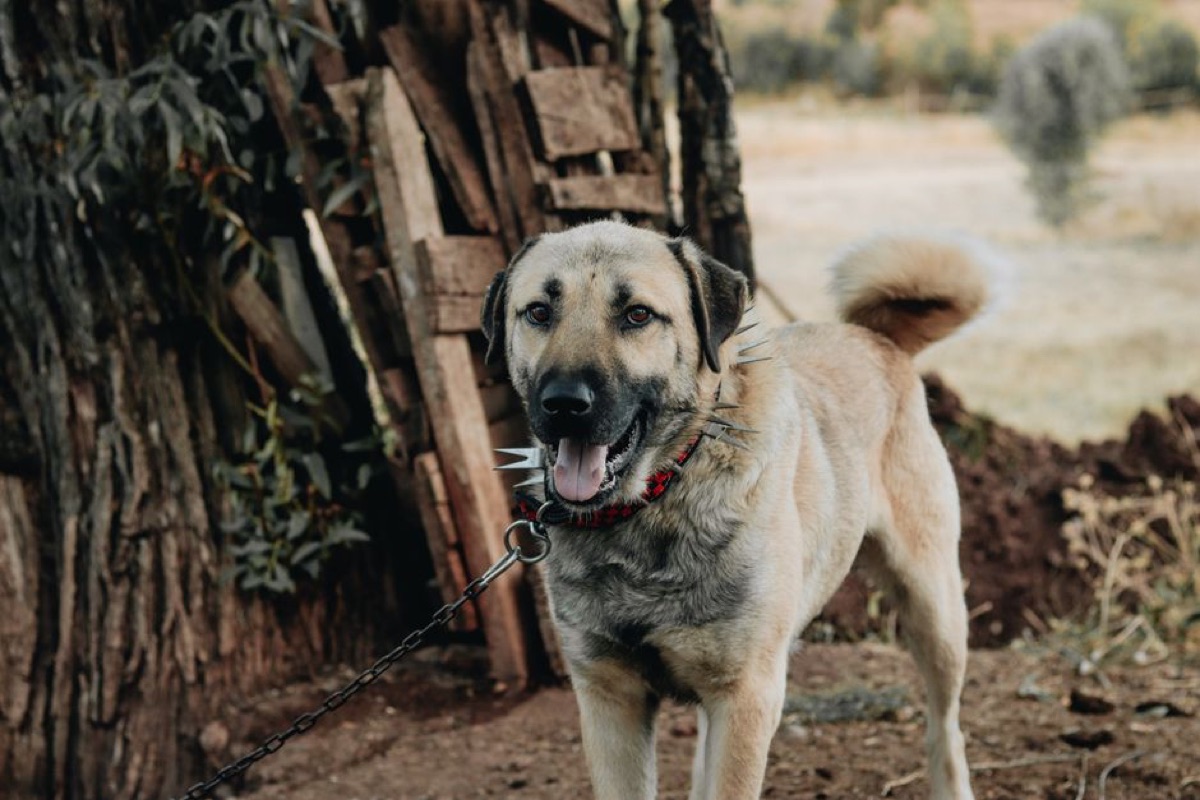
* Rest Periods: When the dog is in their designated sleeping area or crate, the rules regarding "no jumping" or "staying focused" are suspended. This is their safe space to rest. * Safe Exploration: In a secure, fenced-in yard, certain rules might be relaxed to allow for natural sniffing and exploration, provided the dog remains within the bounds of safety. * The Limit of Structure: Over-training can lead to a dog that is too anxious to make decisions. Structure should provide freedom, not eliminate it.
These rules should not be strictly enforced during moments of genuine illness, injury, or extreme environmental distress. When I faced situations where my dog was clearly unwell, I learned to prioritize comfort over perfect obedience.
I realized that being flexible during emergencies is just as important as being consistent during daily life.






Comments 0