Dog Feeding Guide: Use RER Formulas for Precise Nutrition
"Is your dog eating too much or too little? Stop guessing and start calculating with this scientific approach to precision feeding."
Calculating the right amount of food is the difference between a dog that lives a long, healthy life and one that struggles with joint pain, diabetes, or heart issues. By using the science of metabolic rates, you can move past the guesswork of "scoops" and into the precision of caloric management.
* The RER/DER Formula: Use Resting Energy Requirement (Rization) as the baseline and adjust using Derivation Energy Requirement multipliers. * Life Stage Matters: Puppies, adults, and seniors require vastly different caloric densities to prevent obesity or malnutrition. * The Body Condition Score (BCS) Check: Use physical assessment, not just weight, to verify if the calculated amount is working. * Activity-Based Scaling: Adjusting portions based on breed-specific energy levels (e.g., Border Collie vs. English Bulldog).

How to Calculate the Baseline: The RER Formula
I remember sitting on my kitchen floor in Seattle, staring at a bag of kibble and a very hungry Golden Retriever puppy, wondering if I was actually feeding him enough to grow or too much to stay healthy. The bag said "Puppy Formula," but the scoop size felt arbitrary.
I realized then that without a mathematical baseline, I was just throwing calories at a moving target.
The foundation of all canine nutrition starts with the Resting Energy Requirement (RER). This is the amount of energy a dog needs to maintain basic physiological functions—like breathing, heart rate, and organ function—while at complete rest.
Because every dog has a different metabolic engine, you cannot use a generic "one size fits all" scoop.
The mathematical foundation for RER is calculated using the formula: 70 × (body weight in kg)^0.75. This formula accounts for the way metabolic rates scale with body mass.
For a more practical, quick estimate for dogs between 2kg and 30kg, you can use the simplified version: (30 × weight) + 70. This provides a much more accurate baseline than simply doubling a scoop size.
Once you have your RER, you must convert those calories into actual food. This is where the "kcal/kg" value on your food packaging becomes vital. If your dog's RER is 500 kcal and your food is 3,500 kcal per kg, you divide the calories by the density to find the exact weight of food needed.
This prevents the common error of assuming every brand's "cup" is the same.
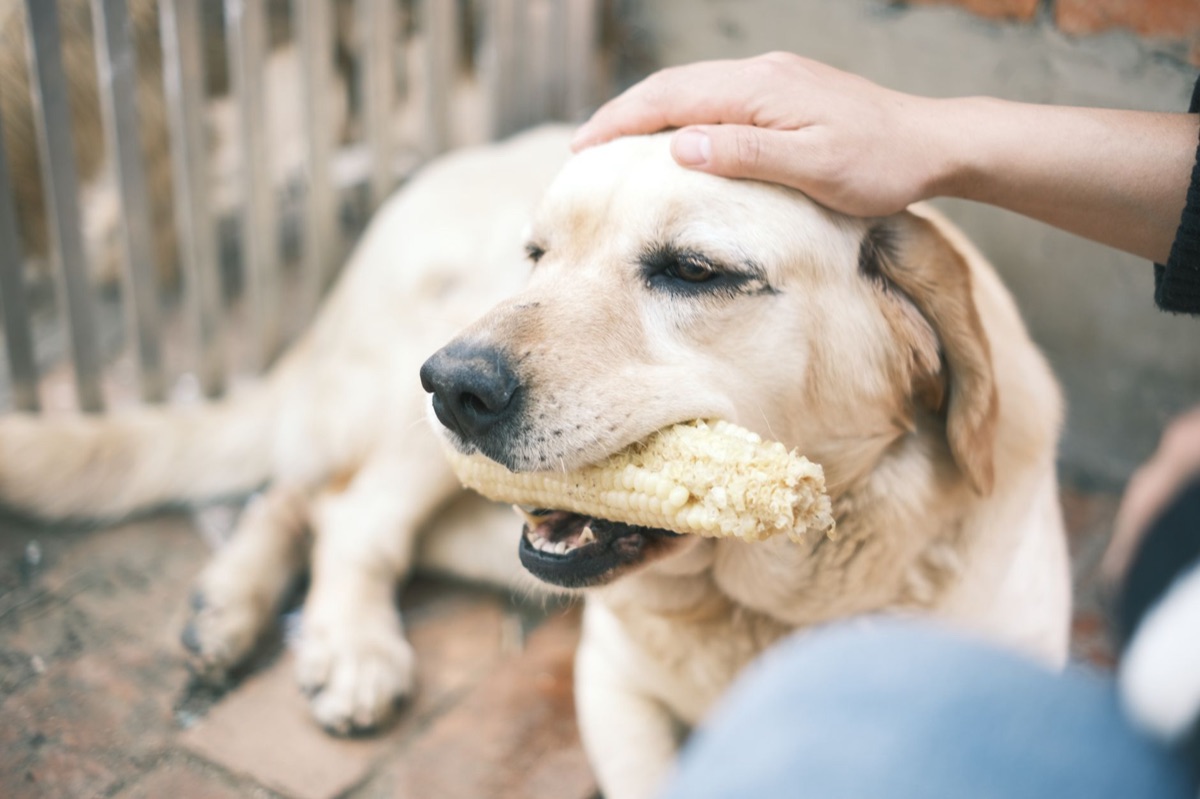
Adjusting for Life Stage: Puppy vs. Adult vs. Senior
Walking through a local park in the suburbs, I watched a Great Dane puppy practically tripping over its own paws, while an older Beagle waddled slowly behind its owner. The difference in their physical needs was staggering.
If I had fed them both the same ratio of calories to weight, the puppy would have been malnourished and the senior would have been obese.
The multiplier changes everything based on the dog's life stage. For puppies under 6 months, the energy needs are massive to support bone and muscle development. You typically apply a multiplier of 2.0 × RER to 3.0 × RER to account for this rapid growth.
This is the "growth phase" where caloric density is king.
For an adult dog in maintenance mode—usually after the growth phase is complete and the dog is neutered or spayed—the standard multiplier is typically 1.6 × RER. This is the baseline for a healthy, stable weight.
As dogs transition into the senior phase (typically 7+ years), the focus shifts. Senior management requires lower calorie density but higher nutrient quality to prevent obesity-related joint issues while still supporting aging organs.
The danger of overfeeding puppies is a critical concern, especially in large breeds. If a puppy grows too fast due to excessive calories, they can develop skeletal issues or permanent joint damage. Precision in the puppy stage is about fueling growth without overshooting the target.
| Life Stage | Typical Multiplier | Primary Goal | | :---ly | :--- | :--- | | Puppy (Growth) | 2.0x - 3.0x RER | Muscle & Bone Development | | Adult (Maintenance) | 1.6x RER | Weight Stability | | Senior (Aging) | 1.2x - 1.4x RER | Nutrient Density & Weight Control |
Factoring in Breed and Activity Level
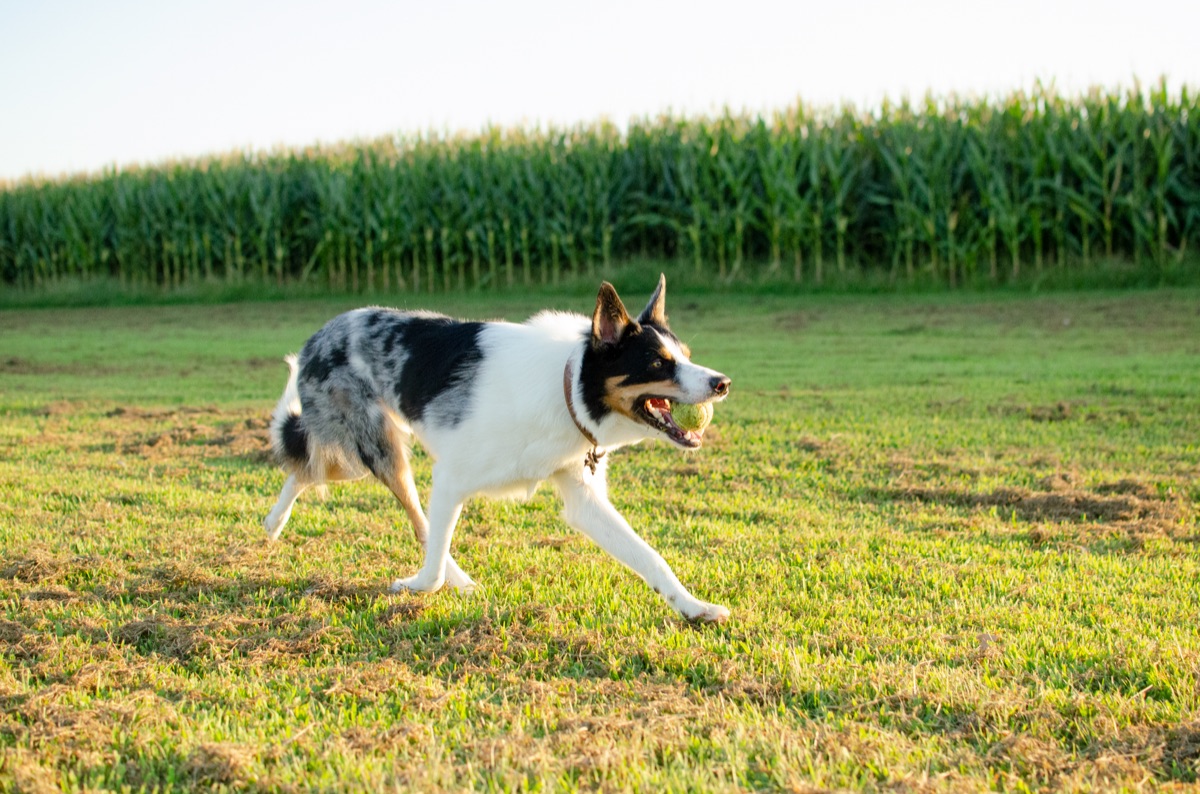
I once watched a Border Collie sprint through a field, looking like a coiled spring, while a nearby English Bulldog lay in the shade, barely moving. If I had used the same feeding schedule for both, the Border Collie would have been starving and the Bulldog would have been struggling to stand.
This is the reality of breed-specific metabolism.
High-energy breeds, such as Jack Russell Terriers or Border Collies, have much higher metabolic demands. Their "Activity Multiplier" needs to be higher to prevent them from losing muscle mass.
Conversely, low-energy or brachycephalic breeds, like Pugs or Bulldogs, often have lower metabolic rates and are much more prone to obesity.
To find the final Daily Energy Requirement (DER), you take your RER and multiply it by an activity factor. You can categorize these as "Sedentary," "Moderate," or "High." A working dog or an active hiker needs a much higher multiplier than a lap dog. This is also where seasonal adjustments come in.
An active outdoor dog in the winter may need more calories to maintain body heat than a dog living in a climate-controlled house during summer.
For dogs that are already overweight, the strategy shifts to a "Weight Loss Diet." This is calculated by taking the target RER (the weight the dog *should* be) and reducing the calories by 20-30% to create a controlled deficit. This ensures the dog loses fat without losing vital muscle mass.
The Physical Check: Using Body Condition Score (BCS)
I remember running my hands along my dog's sides after a year of "correct" feeding. I realized that while the math said he was fine, his ribs were much harder to feel than they used to be. The math was right, but the dog was different. This taught me that the scale is only half the story.
The Body Condition Score (BCS) is a visual and tactile assessment tool. Instead of just looking at the number on the scale, you look at the dog's silhouette.
On a 1-9 scale, a "perfect" dog should have a visible waistline when viewed from above and ribs that are easily felt but not visually prominent.
The "hands-on" test is the most reliable way to check your math. You should be able to feel the ribcage under a thin layer of fat, similar to the back of your hand. If the ribs are poking out sharply, the dog is underweight.
If you have to press through a thick layer of fat to find them, the portion is too high.
This creates a constant feedback loop. If you notice the dog is gaining weight too fast during a growth phase or an activity change, reduce the calculated amount by 10% immediately.
Because weight fluctuations can mask incorrect feeding amounts, the BCS provides the "ground truth" that the math alone cannot.
Common Mistakes and How to Avoid Them
The biggest mistake I made early on was thinking that a "treat" didn't count. I would give my dog a handful of biscuits after a meal, thinking it was just a little something extra. I didn't realize I was essentially feeding him a second, much less nutritious meal.
The "Treat Trap" is the most common cause of obesity. If you are giving treats throughout the day, those calories *must* be subtracted from the total daily portion. If the bag says the dog needs 800 calories and you give 200 calories in treats, the kibble portion must be adjusted to 600.
Failing to do this leads to a slow, dangerous creep in weight.
Another massive error is ignoring the specifics of the package and relying on "volume." A "cup" is not a scientific measurement. Different brands have different densities; one cup of heavy, compressed kibble can weigh significantly more than a cup of light, airy kibble.
This is why using a gram scale is mandatory for anyone serious about precision feeding.
Summary Checklist for Precision Feeding
- Calculate RER: Use the weight-based formula to find the baseline. 2. Apply Multiplier: Adjust for life stage (Puppy, Adult, Senior). 3. Adjust for Activity: Account for the breed's energy and lifestyle. 4. Subtract Treats: Ensure all caloric intake is accounted for. 5. Perform BCS Check: Use your hands to feel the ribs and check the waist. 6. Use a Scale: Weigh food in grams for the most accurate delivery.
#





Comments 0